How is rock ordered, and does a small quantity cost more per metre?
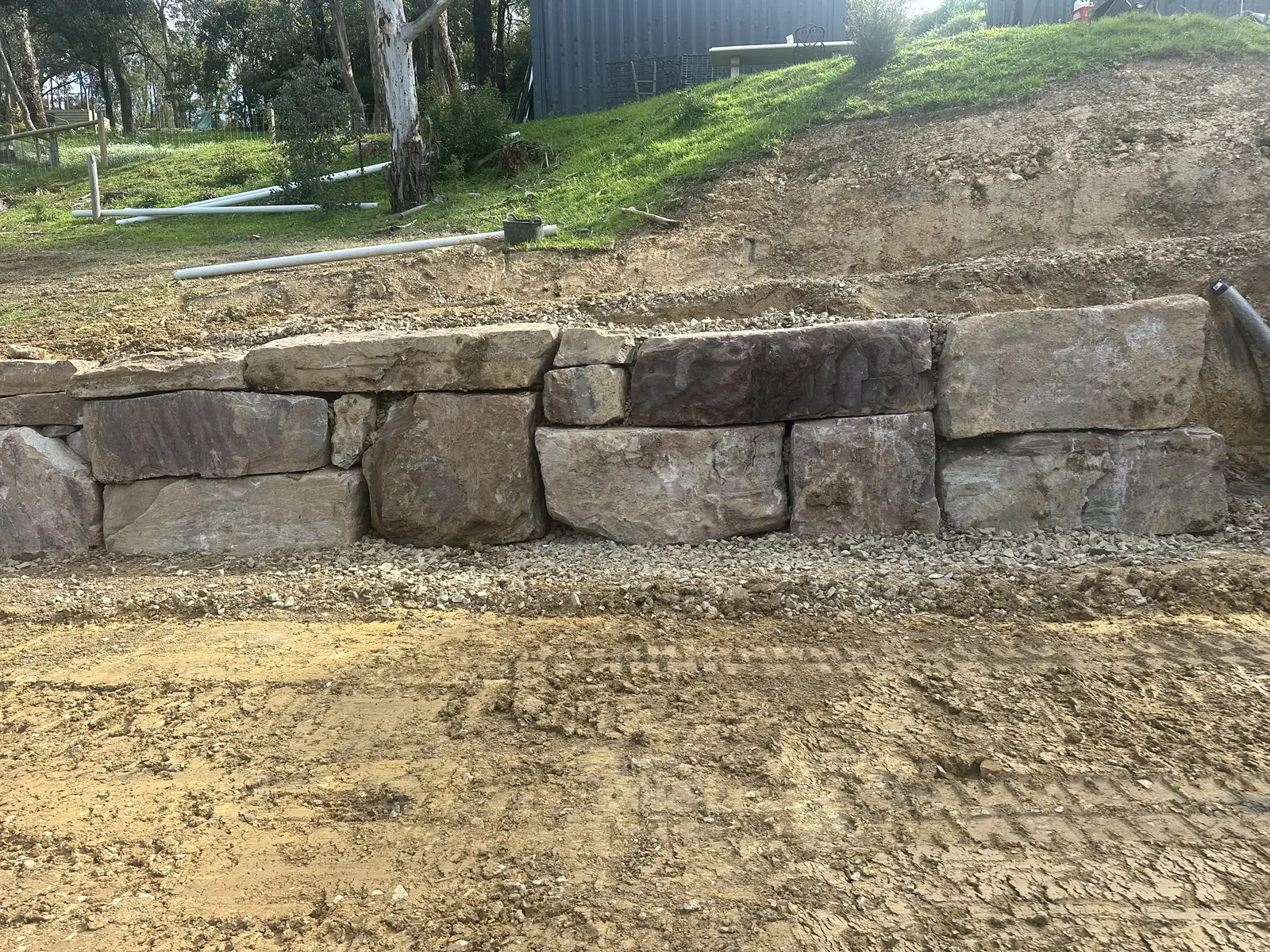
Rock goes by the cubic metre and it travels by the truckload, which is the bit that catches people out on small orders. A tandem tipper carries 10 cubic metres and a twin steer carries 13. You are not only paying for rock, you are paying for a truck movement, so two cubic metres and eight cubic metres end up far closer in price than the volumes suggest. If your job is small the sensible move is to bundle it with something else you need on site, rather than paying a truck to come out twice. At the other end, if you land between 11 and 13 cubic metres it is worth stepping up to the bigger truck instead of paying cartage twice for the sake of a metre or two. For a real number on a real wall, the Silvan job we wrote up took 50 cubic metres of mudstone. Send us a length and a rough height and we will tell you what yours is likely to take.
When does a rock wall stop being landscaping and become building work?
Sooner than most people expect, and it is worth knowing before you plan a garden around it. In Victoria a building permit is required for any retaining wall a metre or more in height, and also for a wall built on or near a boundary where there is a risk of damage to the property next door, whatever its height. Once you are over a metre you are into engineering as well. There are two more lines further along. Retaining structures count as domestic building work, so once the contract price goes past $10,000 the work has to be done by a registered building practitioner, and past $16,000 it needs domestic building insurance. You can check anyone's registration free on the Victorian Building Authority's Find a Practitioner register. None of that is meant to put you off it. It is the sort of thing you want raised when we come and look at the job, not after the rock has landed.
What does a rock truck need to get in, and where does the rock end up?
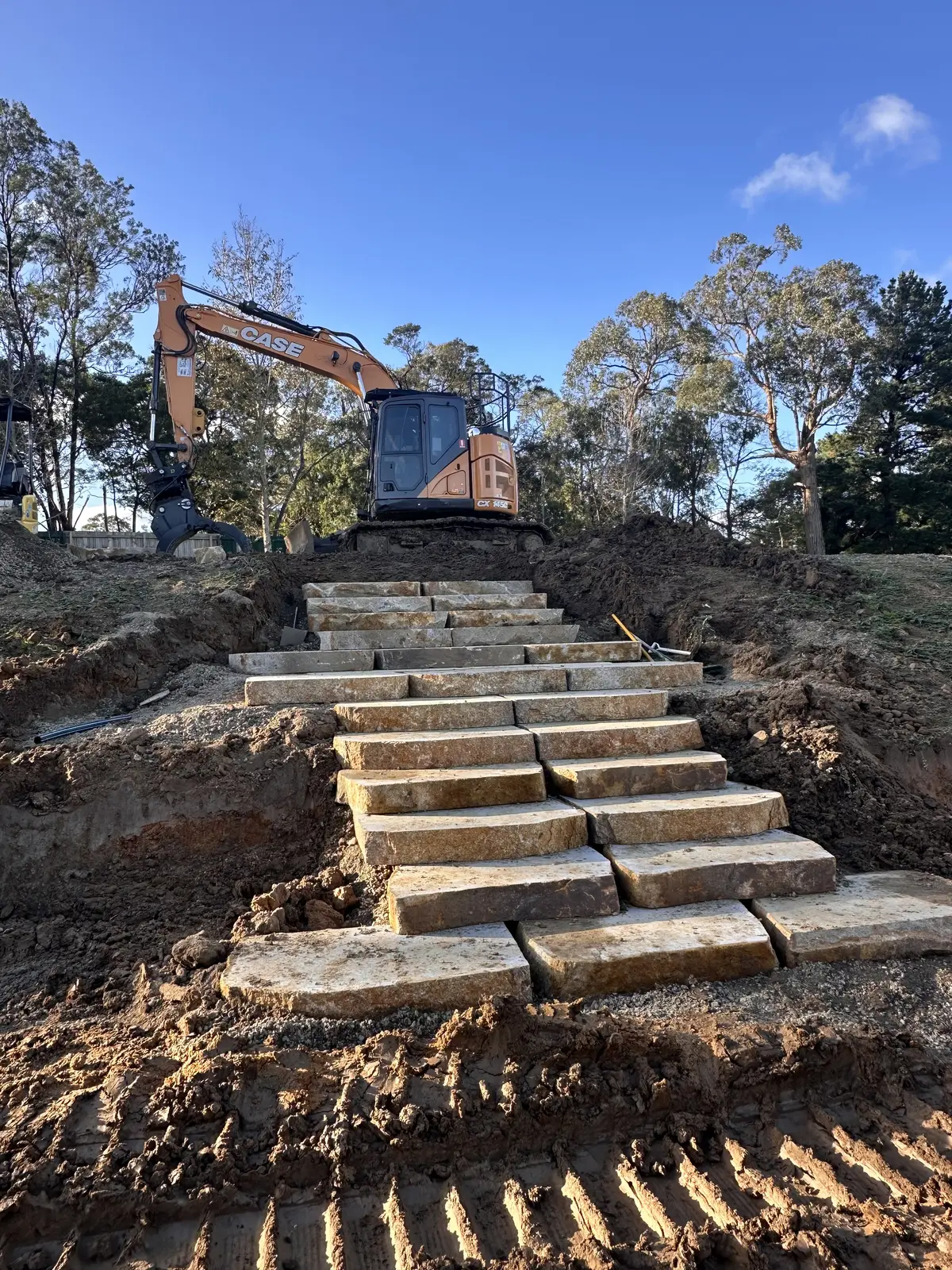
A tandem tipper and a twin steer are both about 2.55 metres wide, so the gate or the driveway entrance is rarely the thing that stops us. It is the turning circle at the other end, and what the ground underneath is going to hold. A loaded truck on a soft nature strip or a new driveway leaves marks you will be looking at for years. So the drop point gets worked out before the truck is booked, not while it is sitting in your street. Where the rock cannot get anywhere near the wall it has to be moved in from the drop point, and that is time on the clock rather than a problem, so tell us early if the only way through is a side gate. A photo down the side of the house, with a bin or a car in shot for scale, usually tells us everything we need.
Which of the six rock types should you pick?
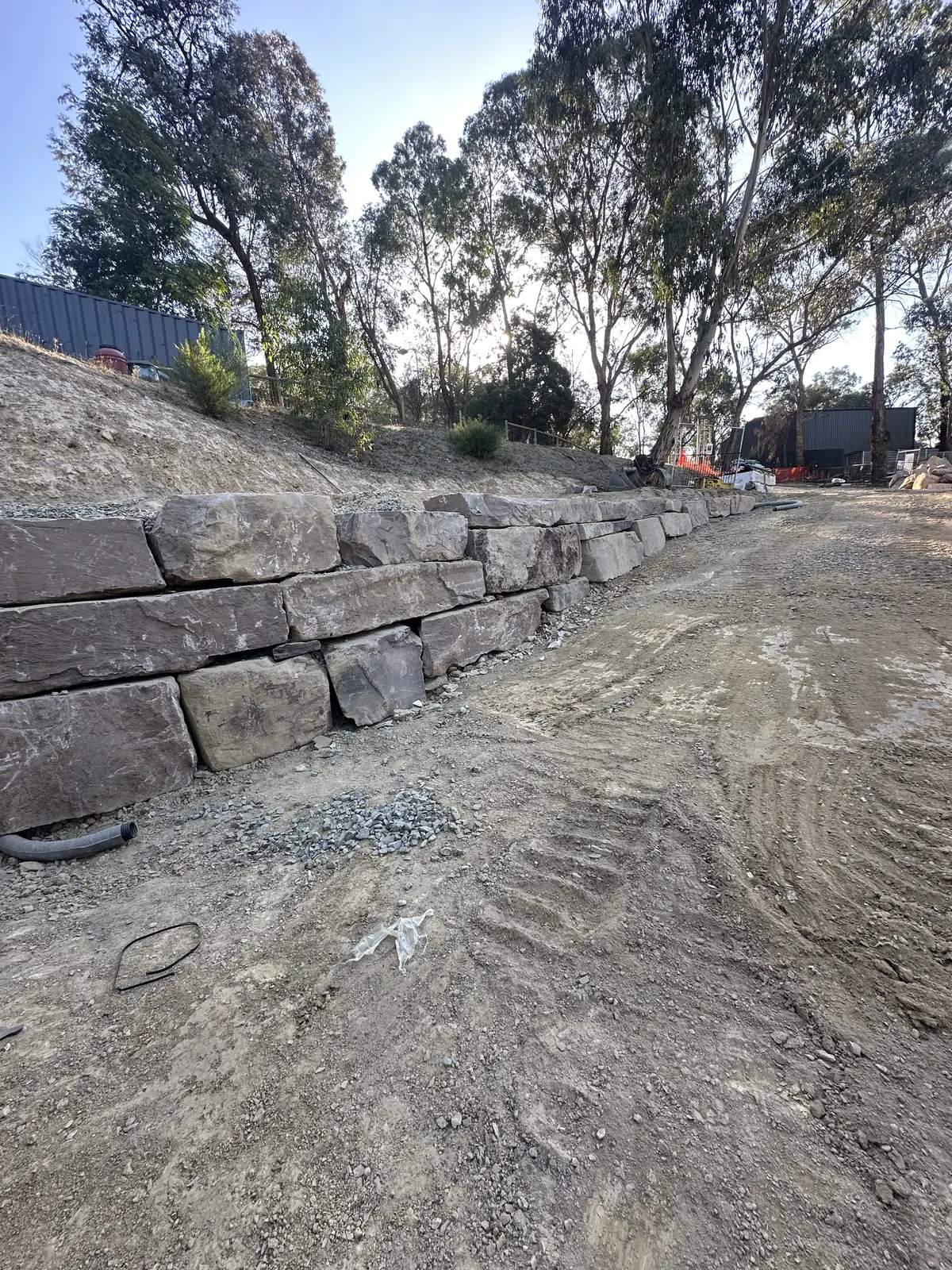
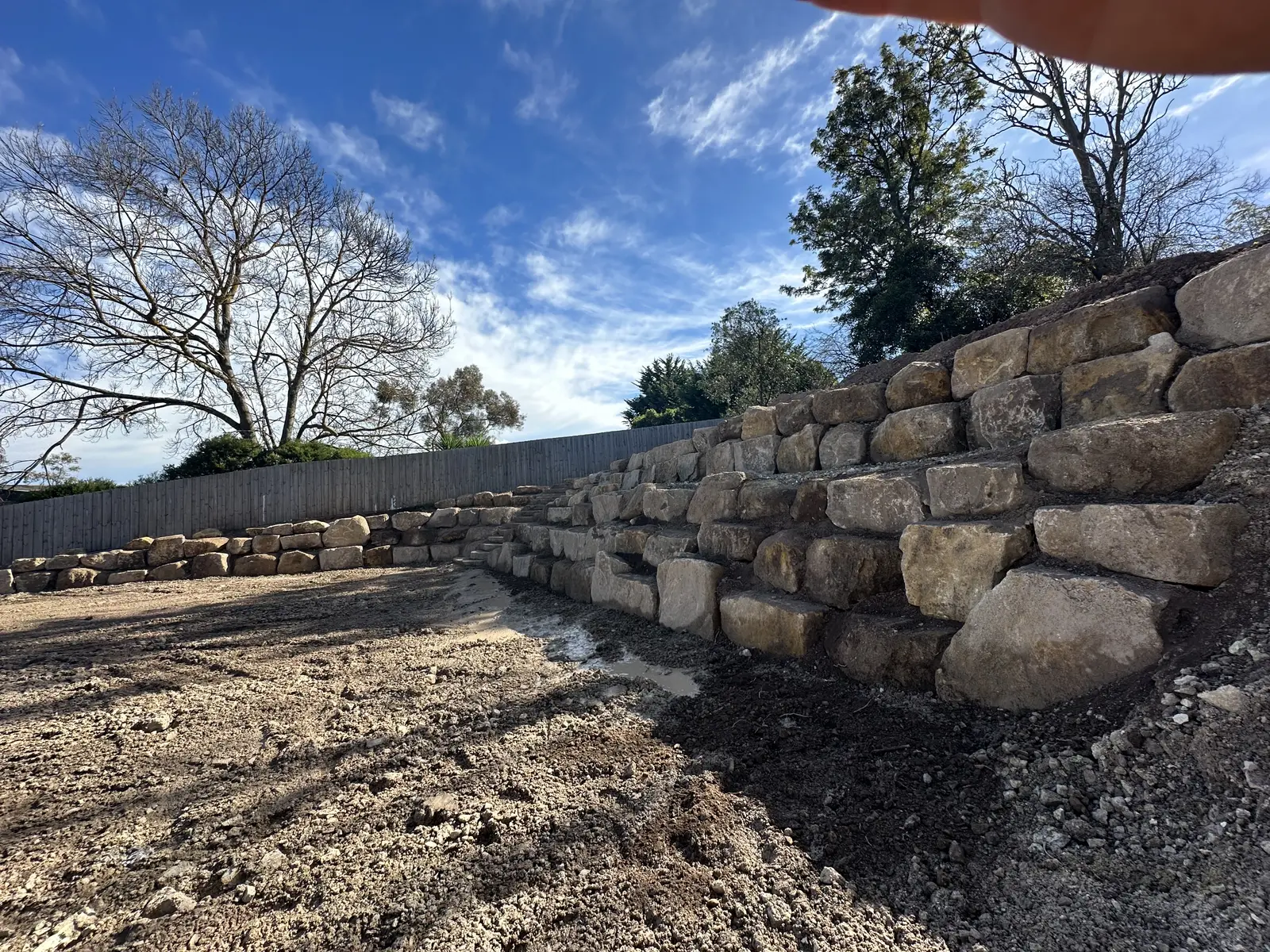
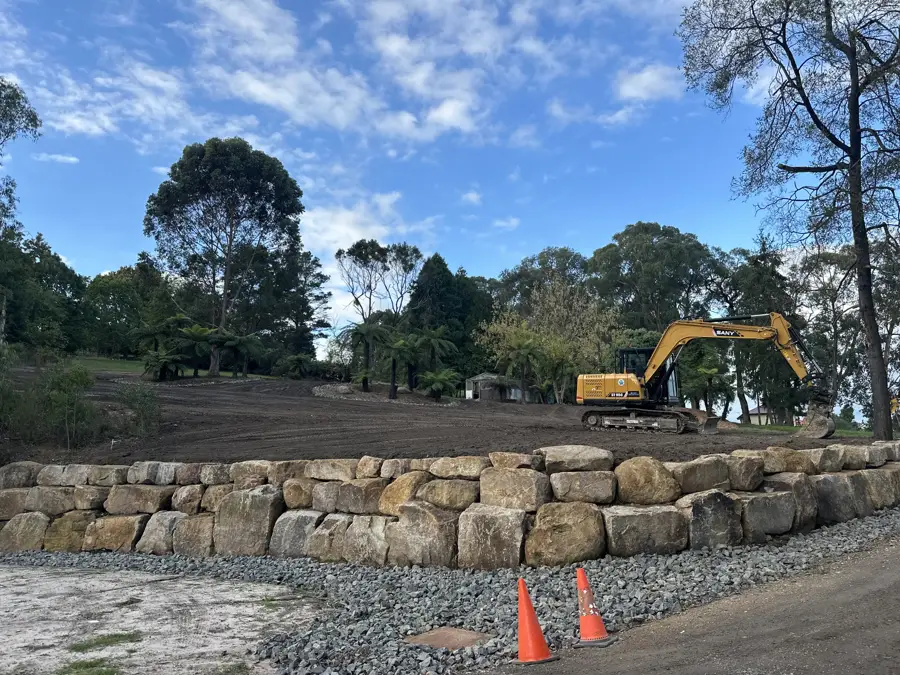
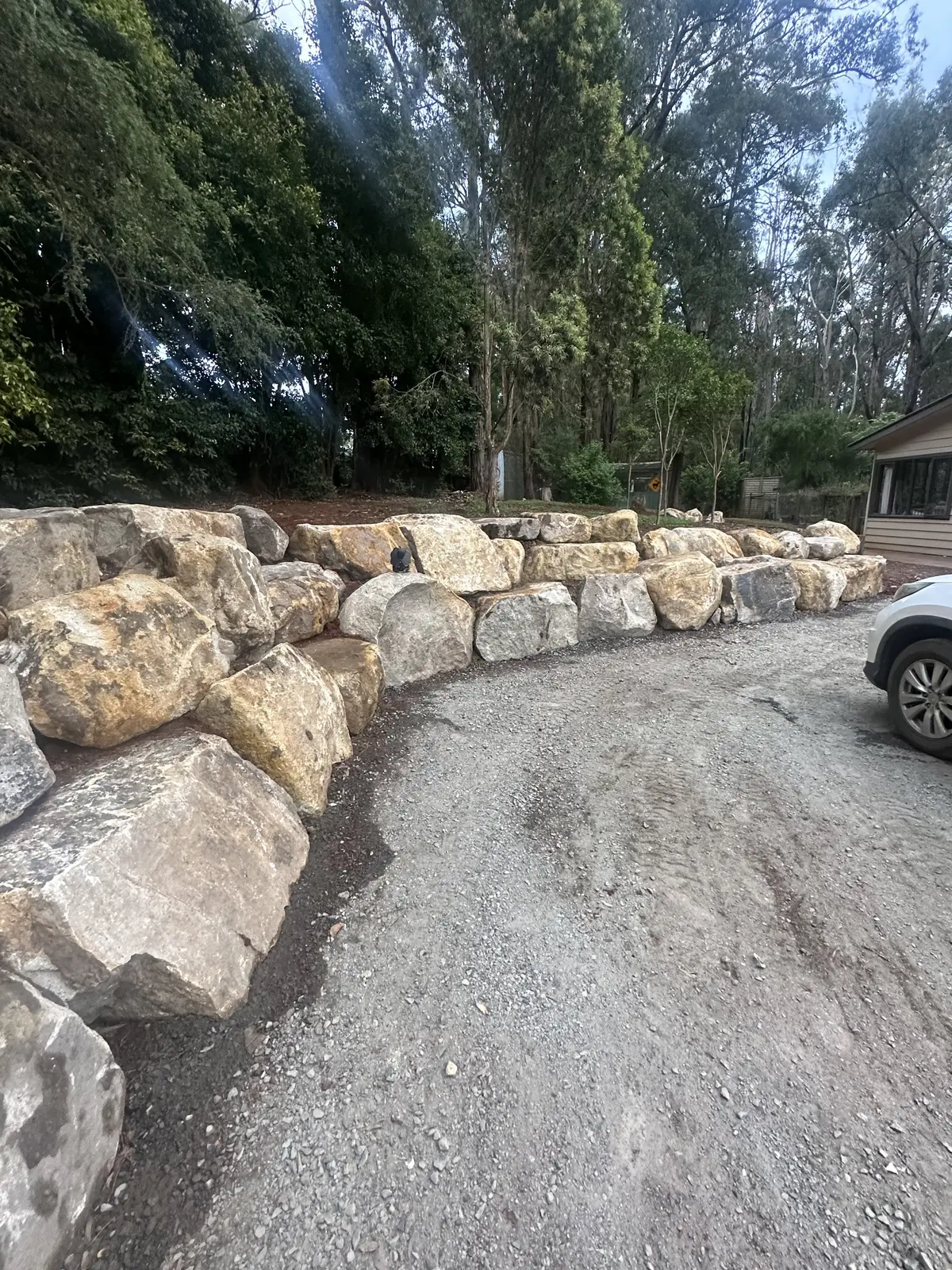
Mostly it comes down to whether the wall is doing a job or making a point. Basalt is dense grey volcanic rock and it is what we would point you at for structural retaining, because it is heavy and weight is exactly what a wall holding ground wants. Yellow and field granite is the hard wearing all rounder, warm toned with softer edges, and it sits against a house rather than shouting at it. Mudstone is the local favourite, warm browns and greys, and it is the one that turns up most on walls around here. Coldstream rock is named after the town up the road from us and it comes out angular, so it interlocks naturally, which makes it a good pick for a dry stacked wall where nothing holds it together but its own shape. Yarra Valley rock does much the same and looks like it belongs on a valley property, because it came off one. Highland slate is the odd one out, darker and layered, better on a feature wall or garden edging than doing structural work. Stock and sizing move through the year, so ring and ask what is on the ground this week.
What goes in behind a rock wall, and why does that decide whether it lasts?
Water. Nearly every failed retaining wall you drive past failed because water got in behind it and had nowhere to go. Wet soil is heavier than dry soil and it pushes, and a wall that was fine in summer starts to lean, then bulge, then goes. So behind the rock we want free draining material rather than the clay that came out of the hole, an ag line along the bottom running to somewhere the water can genuinely leave, and geofabric between the drainage and the soil so it does not silt up and quietly stop working in year three. It is the part of the job nobody sees and nobody photographs, and it is the whole difference between a wall you never think about again and one you are rebuilding. Dry stacked rock does have an advantage here over a solid wall, because water can find its way out through the joints instead of stacking up behind. That is not a reason to skip the drainage though. It is a reason the wall is more forgiving once you have done it properly.
When is the best time of year to get rock in, and what does wet ground change?
Spring and early summer usually, and it is about the ground rather than the rock. Rock does not care what month it is. Trucks and machines care a great deal. After a wet winter the top couple of hundred millimetres of a lawn or a paddock turns into something a loaded truck sinks into, and once you have ruts you have got a second job putting them right. The Bureau of Meteorology's long range outlook for this spring leans below median rainfall across southern and eastern Australia, which if it holds makes September through November a better run at it than last year was. A lean is not a promise and one wet fortnight undoes it, but practically it means if you have been putting a wall off, this is a reasonable stretch to get it booked rather than waiting again. The other seasonal one, if the wall is going in as part of a garden, get the rock and the drainage done before anything is planted. It saves you replanting whatever the machine drove over.