Home About Services Projects Areas FAQ Contact Call Chris on 0423 495 726
Call Chris

POOL EXCAVATION & DAMS YARRA VALLEY

We dig pool holes to your pool builder's set out, and we clean out, deepen and extend dams on rural blocks across the Yarra Valley and the Yarra Ranges. They look like the same job from the street. They aren't: a pool hole has to come out clean and stay dry, and a dam has to hold water, so each one gets dug differently.

// Pool Excavation

DIGGING THE POOL HOLE

The hole gets dug to your pool builder's set out and drawings. The shape and depth are theirs, and hitting their levels is ours, so we want those drawings in hand before the machine turns up, along with the level the finished pool edge has to meet at the house and the paving.

After that it comes down to two things on the day: getting a machine into the backyard, and getting the dirt back out of it. A pool void never gets backfilled, so unless there's a spot on your block that actually wants filling, everything that comes out of the hole leaves on a truck. On our Coldstream job we did the site cut and the pool in the same visit, and 130 cubic metres went out the gate. See how the Coldstream pool dig ran, including the permit, fence and council steps around it.

  • Dug to your pool builder's set out and levels
  • Booked with the site cut when there's a build going on, one setup instead of two
  • Spoil kept on the block where there's somewhere that wants it, carted where there isn't
  • Before You Dig Australia enquiry lodged before we start
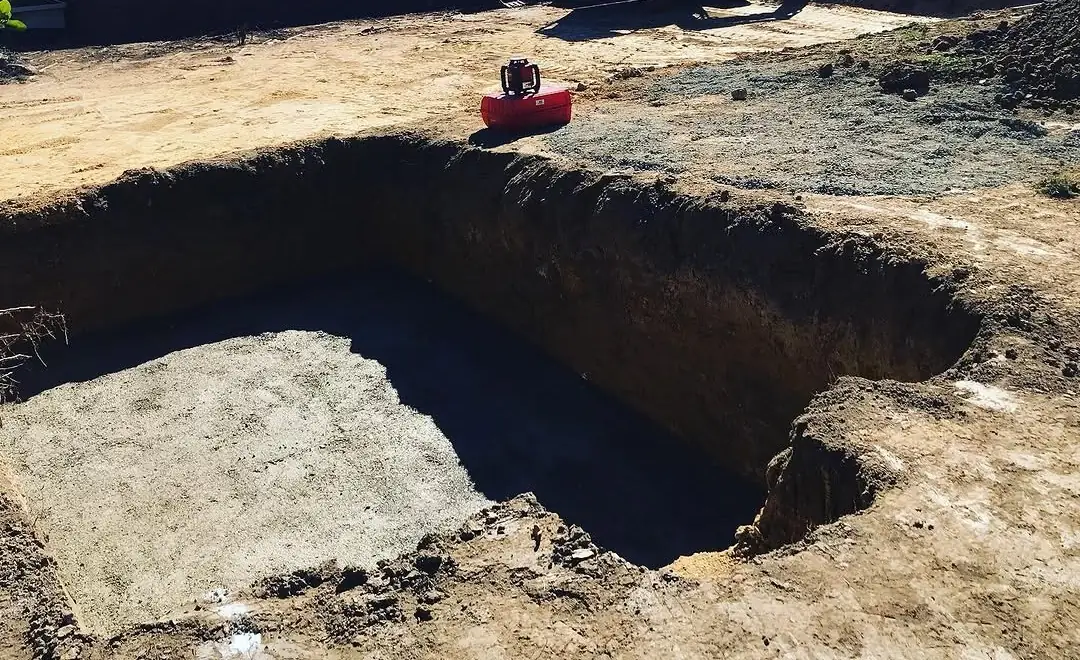
The pool hole at the Coldstream job, a flat pale floor at the bottom and a red rotating laser sitting on its case at the edge
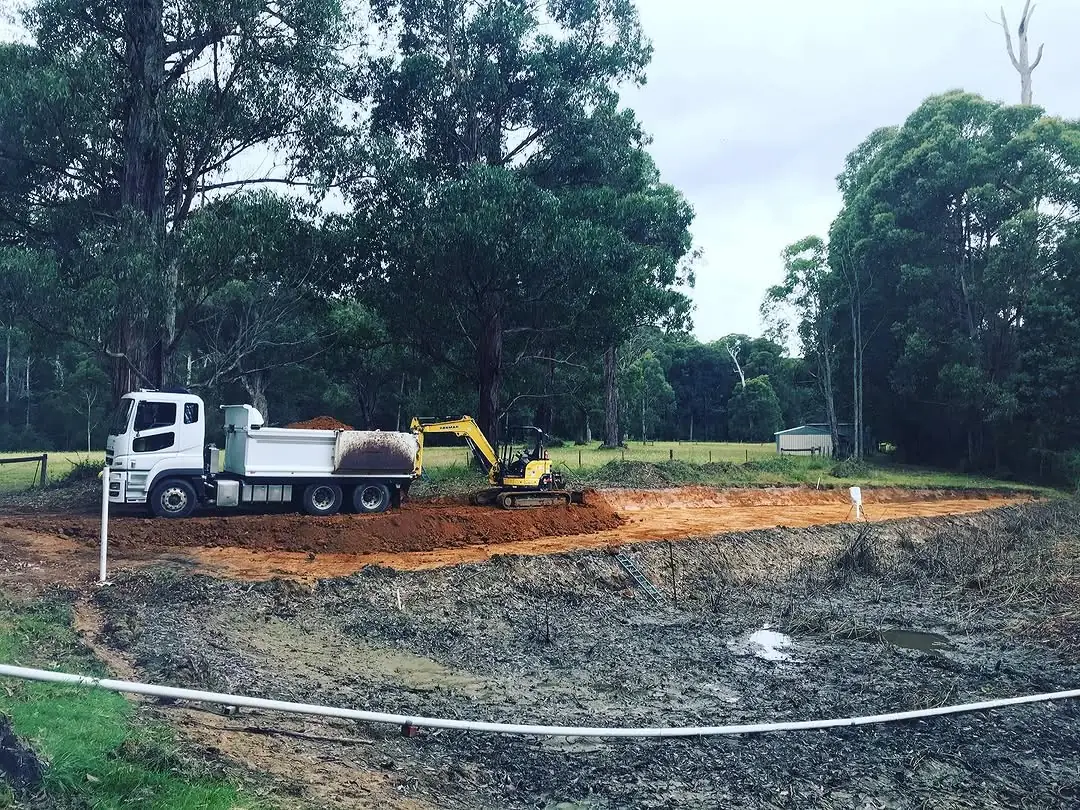
Tipper truck and yellow mini excavator parked on fresh orange clay beside the Warburton dam, a white pipe running across the muddy bed in front
// Dam Extensions & Clean Outs

MAKING A DAM HOLD MORE

Most dam work isn't a brand new dam. It's an old one that has silted up, gone to reeds, or just doesn't hold enough for what the property needs now, and the job is to clean it out and push it further.

The hard part is usually getting in. A dam that has been sitting for years has a soft, wet bottom that won't carry a machine, so how we get in and how we get back out is worked out before we start, not halfway across. We'd rather do it when the water is low, which around here usually means the back end of summer or autumn.

What comes out is mostly wet silt, reeds and organic muck, and none of it belongs in a dam wall. If the wall needs building up, it has to be built from clay that will hold water, not from whatever came out of the bottom.

  • Old dams cleaned out and deepened
  • Dams extended to hold more water
  • Silt and reeds dug out of old, overgrown dams
  • Rural blocks across the Yarra Valley and the Yarra Ranges
// One Of Our Own

WARBURTON DAM, APRIL 2021

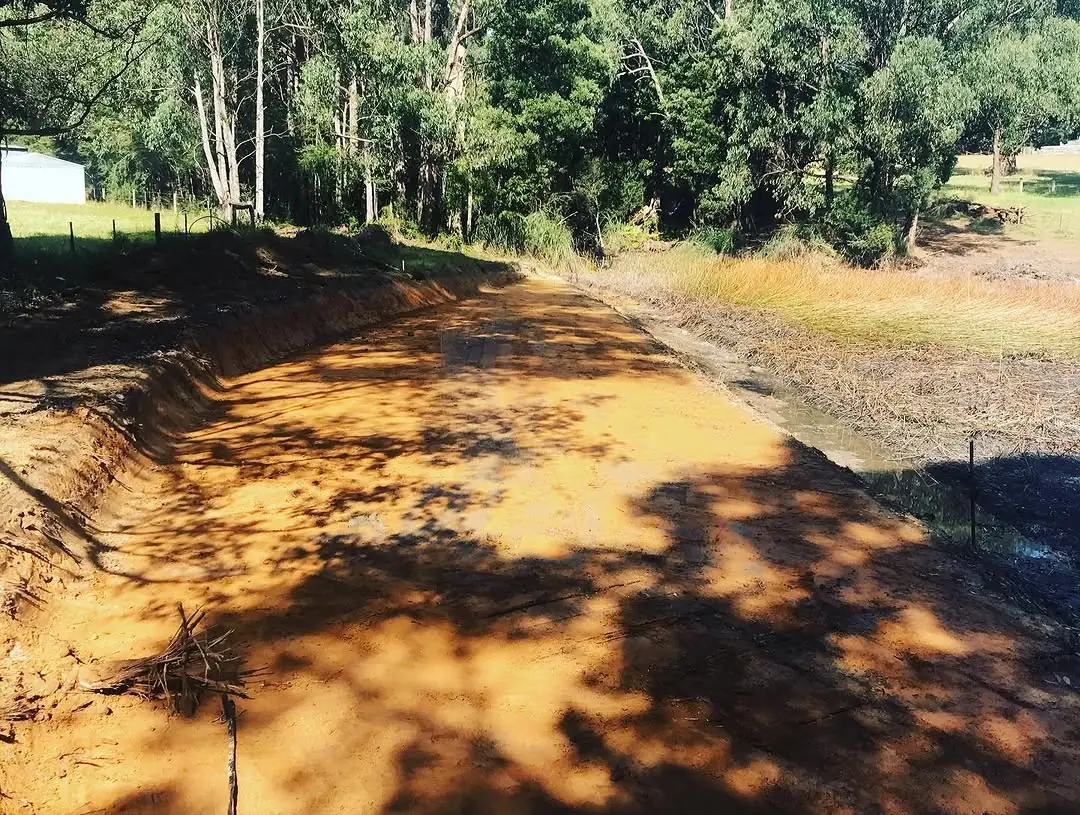
A few days down in Warburton in April 2021, extending a dam and cleaning it out. Here's how we put it at the time: “Managed to get into the dam using the reeds to hold us up and worked our way out.” It was left ready to fill back.

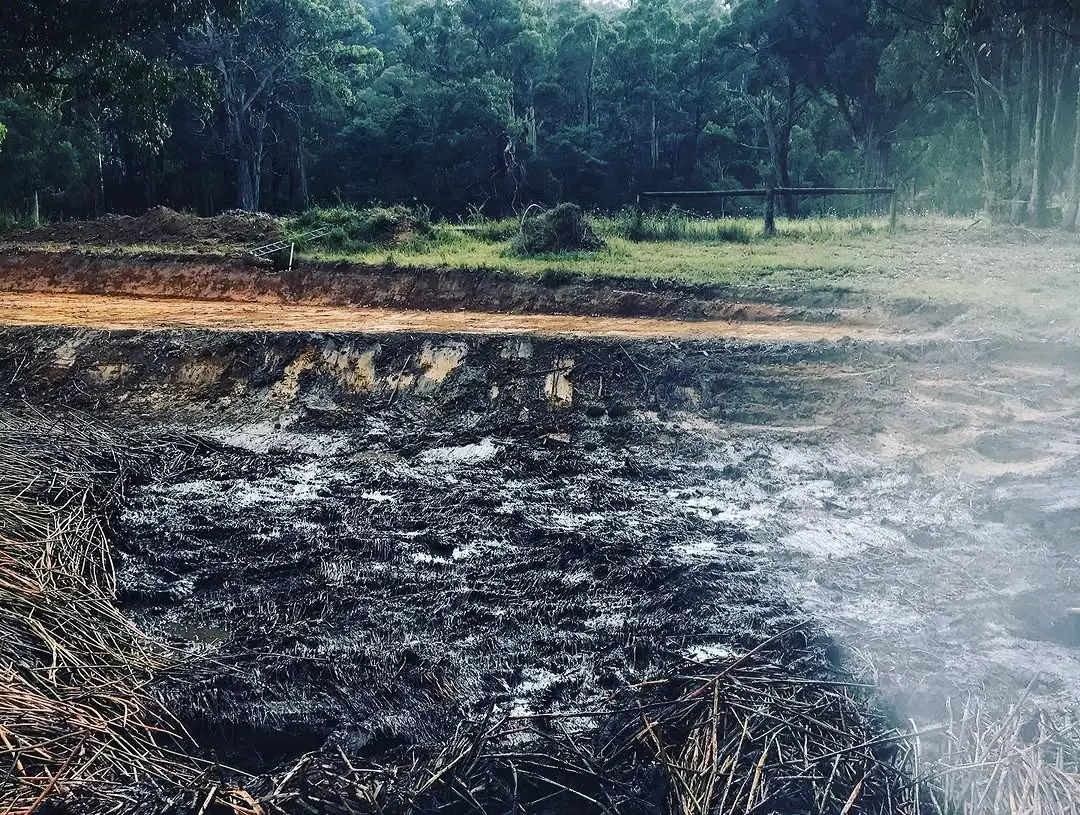
That's the part of a dam job you never see in the finished photo. The reeds were the only thing in that dam firm enough to carry a machine, so they became the way in. Once we were in, it was a matter of working our way back out. If you've got an old dam that's gone soft and reedy, that's the first thing we'll be looking at when we walk it with you.

Freshly cut bank and floor of bare orange clay along the edge of the Warburton dam, with reeds and a fence line on the right
Dark wet dam bed with flattened reeds in the foreground and the freshly cut orange bank behind it, Warburton
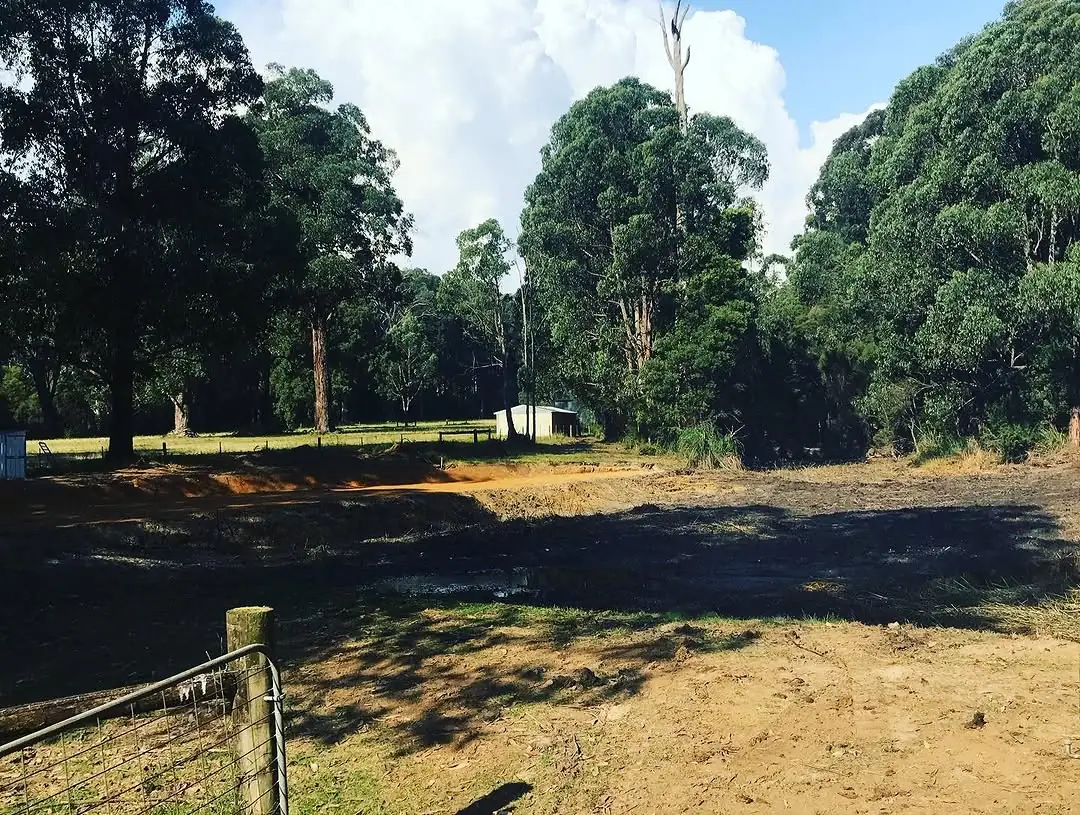
The emptied Warburton dam seen from a paddock gate, bare ground across the bed and tall gums behind

See the original on our Instagram.

// Before You Dig A Dam

WHAT TO CHECK FIRST

Check whether your dam needs a licence before anyone books a machine. In Victoria a new dam needs a construction licence if it sits on a waterway, which includes creeks, natural channels and any dam with a catchment of 60 hectares or more. The heights and volumes that trigger one away from a waterway are in the questions below. Most house and stock dams never get close to those, so for most blocks the waterway test is the one that matters. If water runs into your dam along a natural gully or creek, ask before you dig, not after.

Then there's the ground. A dam only holds what its soil will hold, and Agriculture Victoria's guidance is that good dam material has more than 10 per cent clay. Plenty of clay around the hills here will do the job. Some of it disperses in water and tunnels, and that's worth finding out with a few test holes before the water goes in rather than after it starts leaking out.

// FAQ

POOL & DAM QUESTIONS

Straight answers on dam licences, timing, silt, soil and pool digs across the Yarra Valley and the Yarra Ranges.

Do I need a licence to extend or clean out my dam?

Possibly, and it depends on the dam rather than the size of the job. If your dam is already licensed, its licence conditions say it can't be altered, removed or decommissioned without a works licence that covers the change. A new dam needs a construction licence if it sits on a waterway, or once it is at least 5 metres high holding 50 megalitres or more, 10 metres high holding 20 megalitres or more, or 15 metres high whatever it holds. A waterway includes creeks and natural channels, and any dam with a catchment of 60 hectares or more. Around here you are in the Yarra catchment, where Melbourne Water handles the water licences. Nothing can start until a licence that is needed has been issued, so ring them first, and ring Yarra Ranges Council about whether the earthworks need a planning permit too.

When is the best time of year to clean out a dam?

When the water is at its lowest, which around the Yarra Valley usually means the back end of summer into autumn. Less water means less to pump or work around, and more of the bed you can actually see. Our Warburton job was done in April. Even then the bottom of an old dam stays soft, so how the machine gets in and back out is planned before we start. Leave it until the winter rain arrives and you are paying for a machine to slop around in mud.

What happens to the silt and reeds that come out of a dam?

They need to go somewhere they can dry out, well away from the water, so the first good rain doesn't wash them straight back in. What doesn't happen is that muck going into a dam wall. Agriculture Victoria's guidance is that earth with more than about half a per cent organic matter is unstable and unsuitable for an earth wall, and the bottom of an old dam is mostly organic. Once it has dried out it can be useful spread across a paddock, which beats paying to cart wet sludge off the property.

How do I know if my soil will hold water?

Dig and test it before the dam is built or made bigger. Agriculture Victoria's guide says good dam material has more than 10 per cent clay and more than 20 per cent silt and clay combined. A quick check in the hand is to work a moist spoonful of fine soil until it feels like warm plasticine. It should hold together and ribbon out between your thumb and finger. Their guide plans on about six test holes for a medium sized stock dam, going about 600mm below the depth you want to dig to, or down to rock. Some clays also break down in water and tunnel, which is worth knowing before any water goes in.

What do you need from me before you dig a pool?

Your pool builder's set out and drawings, and the level the finished pool edge has to sit at against the house and the paving. The shape and depth are the builder's, and hitting their levels is ours. The building permit should already be issued, and a compliant barrier needs to be ready for the day the hole opens up, because a pool hole is a hazard from the first bucket. Then tell us about access, and send a photo down the side of the house if the backyard is tight.

Where does the dirt from a pool dig go?

Off the block, unless there is somewhere on your property that actually wants filling. A pool void never gets filled back in, so everything that comes out of the hole has to go somewhere else. On our Coldstream job we did the site cut and the pool on the same visit and 130 cubic metres went out the gate. If there is a low corner of the block that needs building up, we look at keeping material there first, because it is cheaper to move dirt a few metres than to put it on a truck.

// Get a Price

TELL US ABOUT YOUR POOL OR DAM

Send through the suburb, whether it's a pool dig or a dam, and anything awkward about getting a machine in. For a dam, a photo from the bank helps more than anything. For a pool, have the builder's drawings handy. Chris will come back to you.

// Let's Talk Earthmoving

READY TO
DIG IN?

Request a site quote across the Yarra Valley and Melbourne. Call Chris today.

Call Chris on 0423 495 726 Send an Enquiry
Free quote