Who is responsible for the crossover, and what does council want before we start?
A driveway comes in two parts with two different sets of rules. The crossover is the section between the edge of the road and your property boundary, it sits on the road reserve, and it needs council consent before anyone touches it. What catches people out is that consent is not council taking it off your hands. The crossing is your asset. You pay to put it in and you pay to maintain it, even though it is not on your land. Everything past the boundary is yours as well, just without the permit. In Yarra Ranges, which covers most of the valley, constructing, altering or removing a vehicle crossing goes through a works in a road reserve permit. Budget a few hundred dollars for it, allow the ten business days council asks for, and expect a security bond to be attached to the approval. Fees change each July and every council sets its own, so get the current number from yours rather than off a website. Council also has a view on how the crossover gets built, because a street with concrete kerb and channel and an unmade gravel road with open culvert drains are not the same problem, and both of those exist within a few minutes of each other around here. We will tell you which one you are dealing with when we come and look. What we will not do is start on the crossover before the permit is in hand, because that mistake lands on you rather than on us.
What actually goes in under a driveway, and why does skipping it show up two years later?
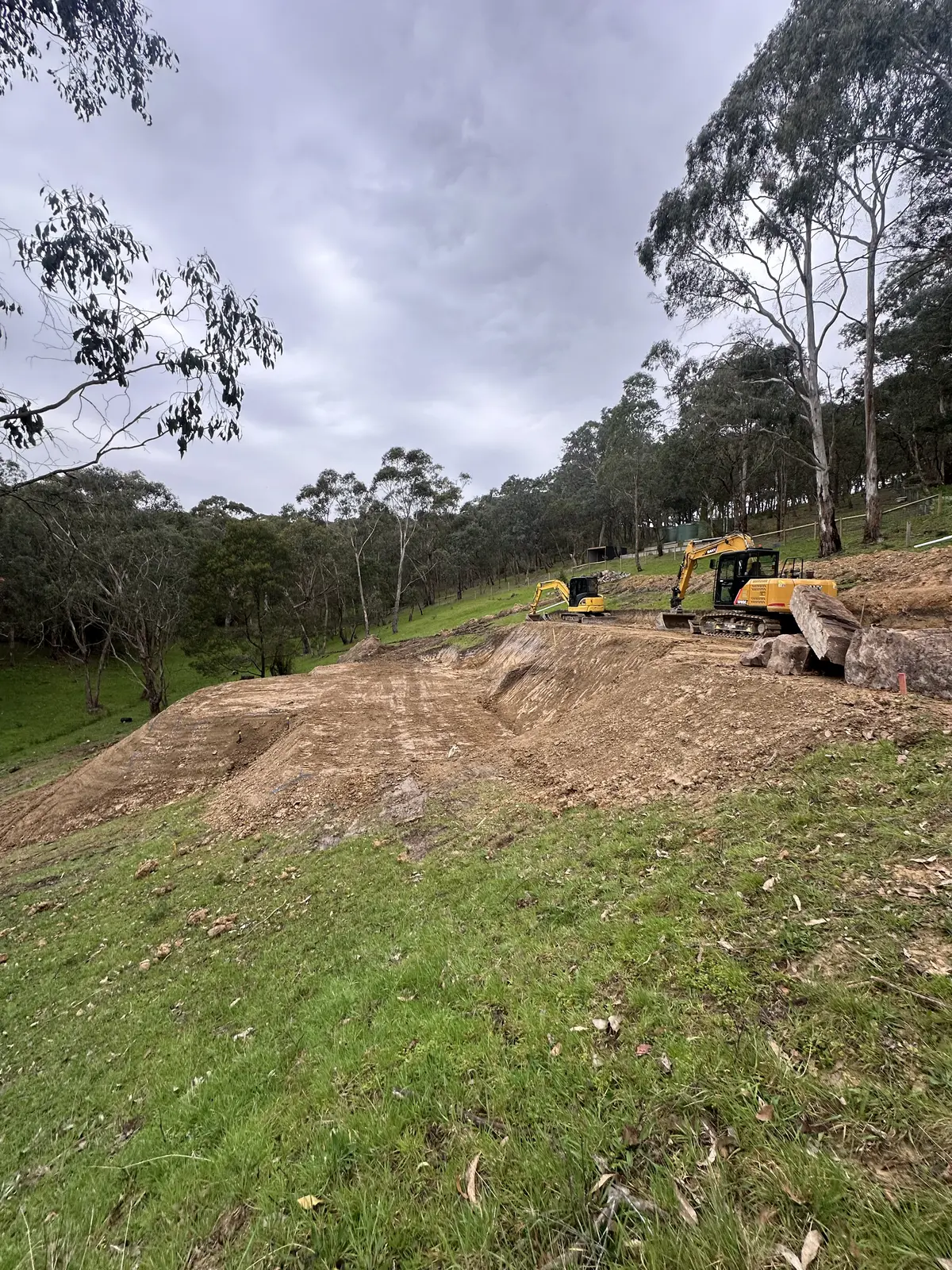
The base, and it is the part that decides whether the driveway lasts. The order is topsoil and any soft spots out first, then the ground underneath compacted properly, then compacted crushed rock over the top, commonly around 75 to 100mm on a residential driveway and more where the ground is poor or the loads are heavier. Compaction matters more than depth. A thick layer of rock that has been tipped and raked rather than rolled is worse than a thinner one that has genuinely been compacted, because it settles unevenly and takes the surface down with it. The other thing we set at base level is the fall. Building drainage into the base is straightforward, hunting for it later in the screed is not, and a driveway with no fall in the base is a driveway that will pond. When a concrete driveway cracks early it is far more often a base that moved than concrete that was wrong. This is our part of the job, and it is why we would rather spend an extra hour on the base than have your concreter pour over something that is not ready.
How much fall does a driveway need, and how steep is too steep?
Fall first, because it is the cheap one to get right. You want a minimum of about one in a hundred across the width so water runs off rather than sitting there, and it has to run somewhere legal, which means council stormwater or an approved system on your own property, not across the footpath and not onto next door. Steepness is the other half. The Australian standard for domestic driveways sets the absolute maximum at one in four, a twenty five percent grade, and one in five is the ceiling most people are happier living with. The thing that actually catches people out is not the slope, it is the change of slope. Where the grade changes by more than one in eight you need a transition of at least two metres to smooth it, and that is the difference between driving in normally and scraping the front of the car every time you come home. On a sloping block the honest answer is sometimes that the driveway wants to take a different line across the site than the obvious straight run from the road to the garage. Much better worked out before anything is dug than after.
What does a rural driveway need that a suburban one does not?
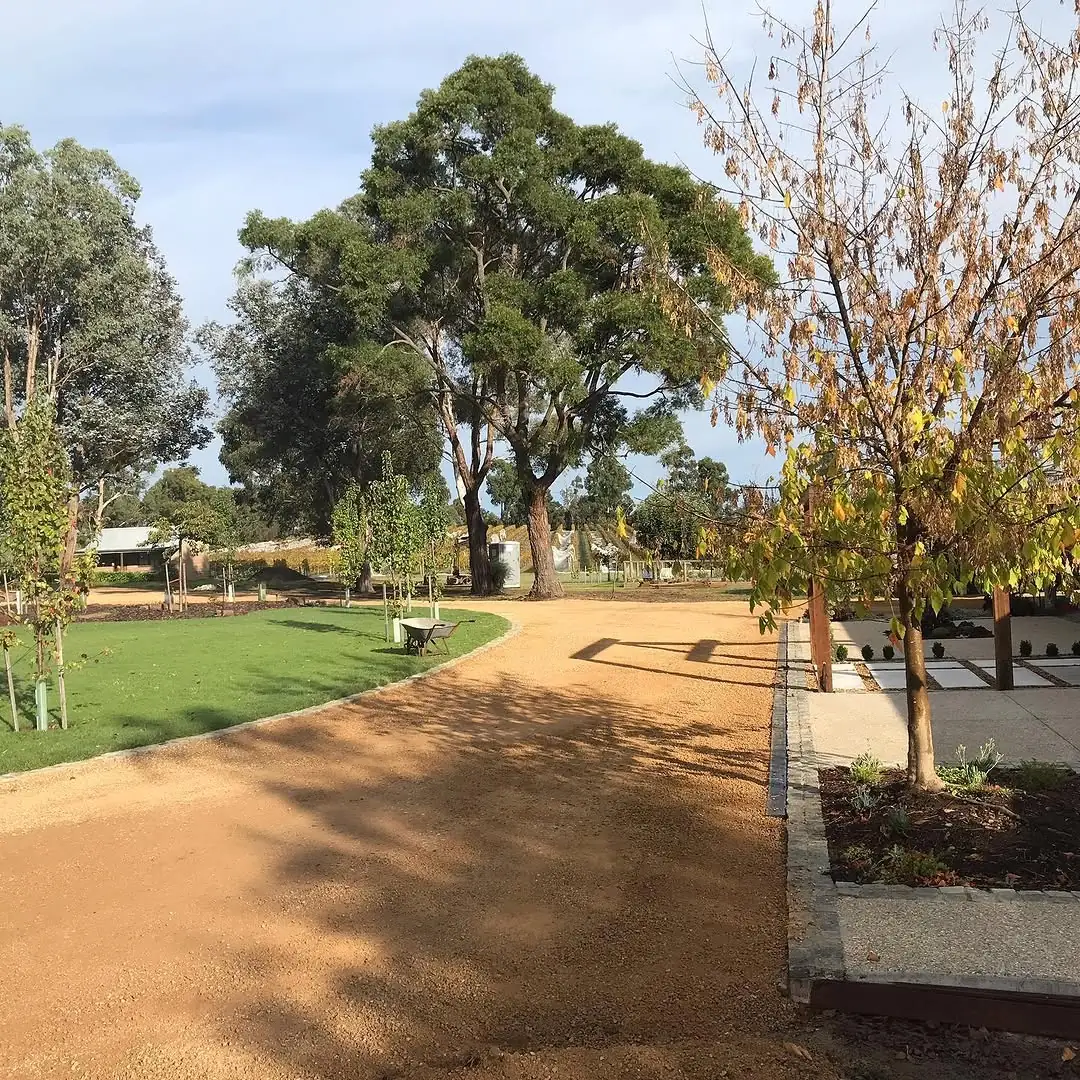
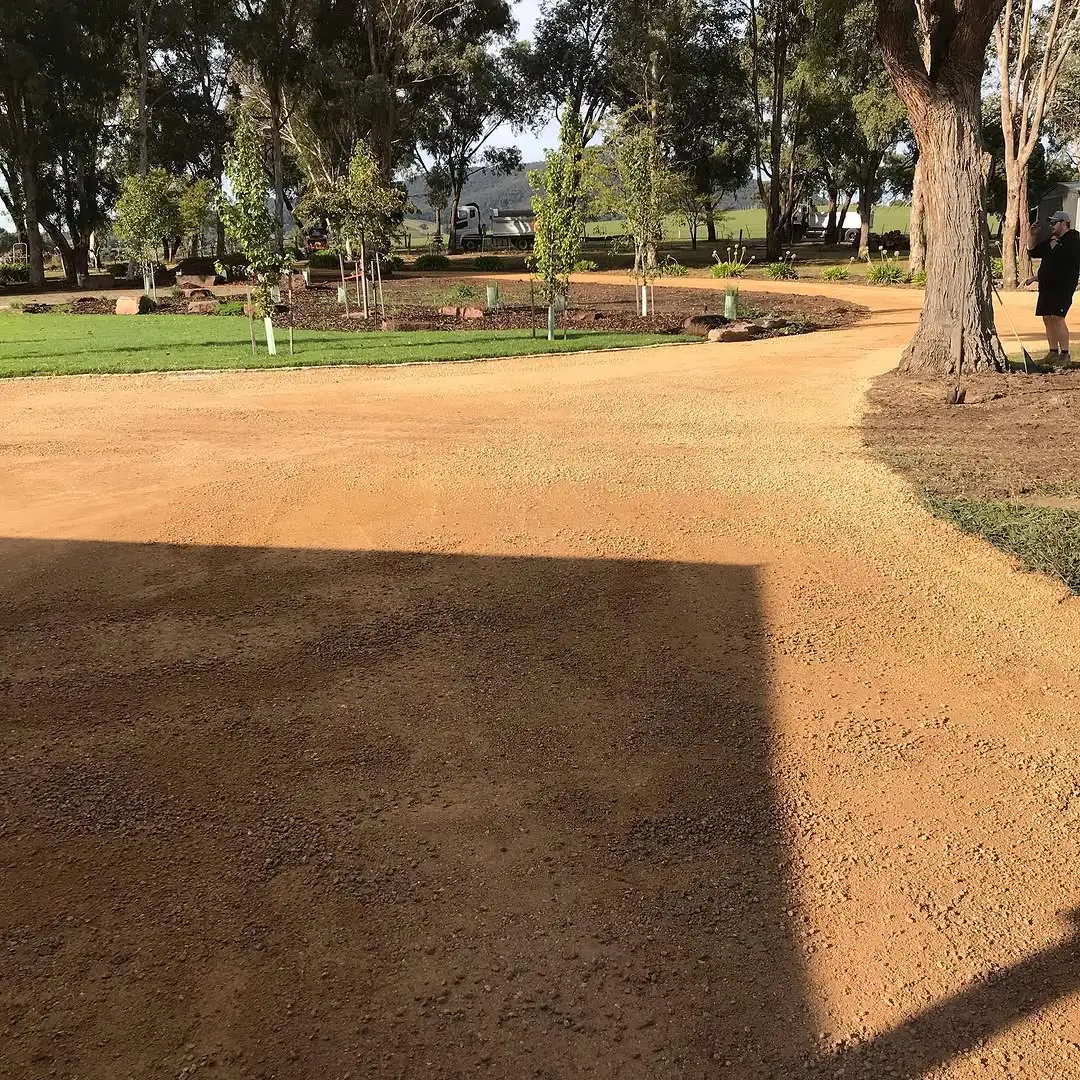
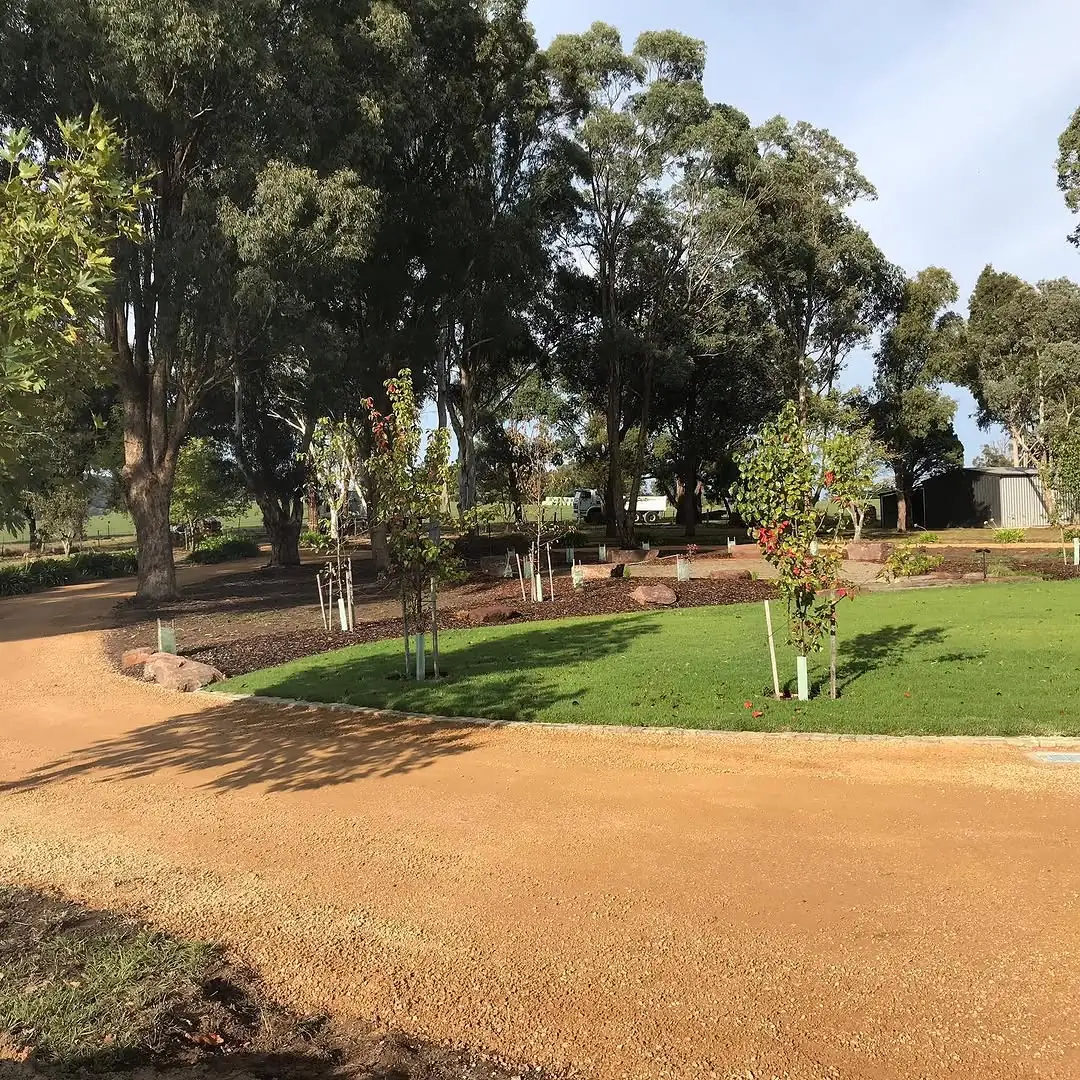
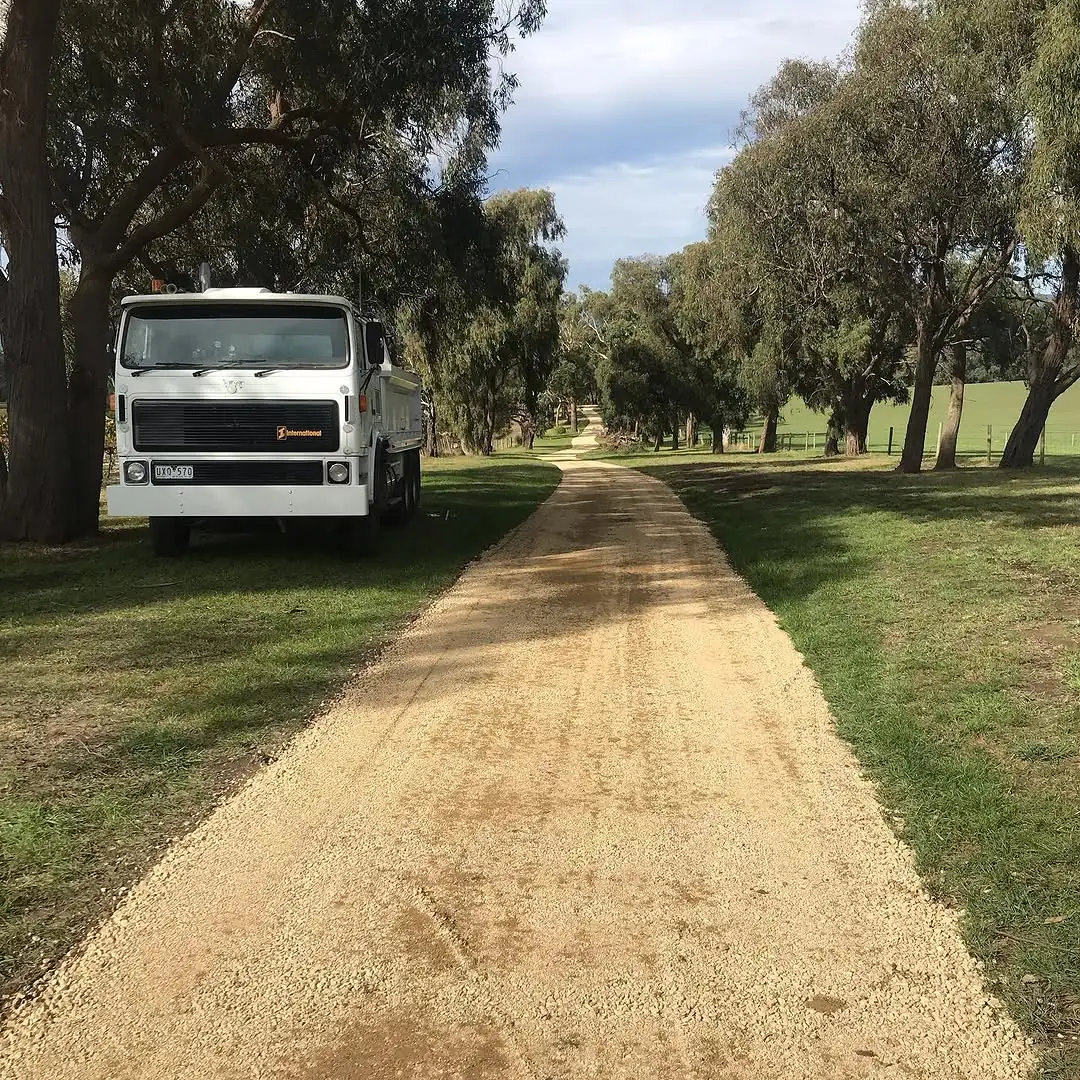
Room for a fire truck, and it changes the whole design. The CFA access guidance starts once the run from the road to the house or the water supply is longer than 30 metres. From there the driveway surface wants to be 3.5 metres wide, with another half a metre each side clear of gate posts, shrubs and anything else, and clear overhead to 4 metres. The surface needs to be all weather with a load limit of at least 15 tonnes, which is a real constraint on a track that turns to soup in August. Past 100 metres you need somewhere for a truck to turn around, either a circle with an eight metre radius or a T or Y shape with arms of at least eight metres from the centre. Past 200 metres, if the driveway is narrower than six metres, it needs passing bays six metres wide and twenty metres long at least every 200 metres. Grade counts too, an average of no steeper than one in seven, and no more than one in eight going into and out of a dip. Plenty of existing valley driveways meet none of that and nobody is going to make you rebuild one that is already there. It bites when you are putting a new driveway in or a planning permit is involved. It is also just sensible. If a fire truck cannot get up there, neither can a delivery, a removalist or an ambulance.
Do you take the old driveway out too, or only build new ones?
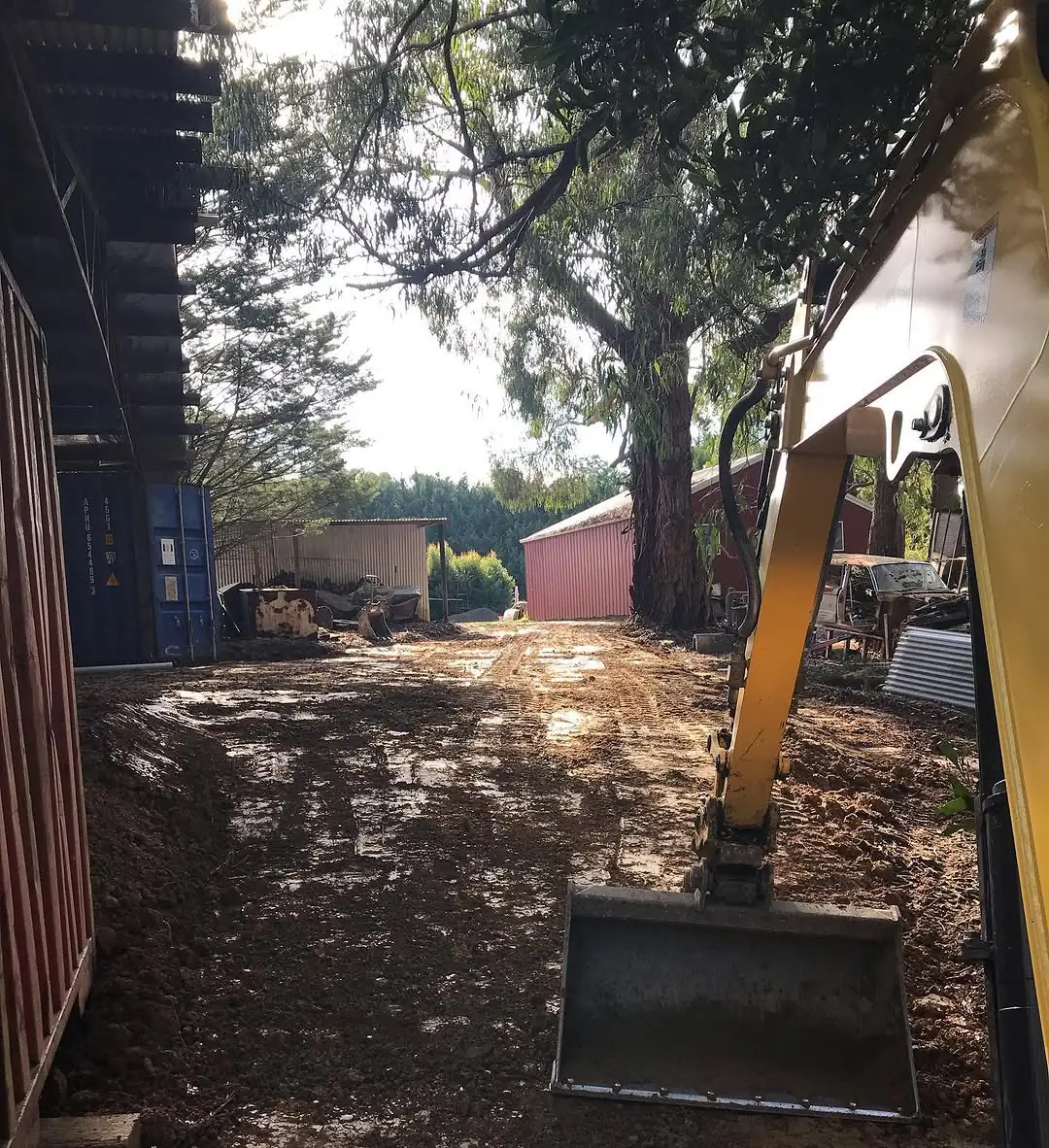
Both, and removal is part of the same job rather than a separate trade. Breaking out an old concrete or asphalt driveway and carting it away happens on the same visit as the dig for the new one. Worth knowing that broken out concrete is a resource and not rubbish. It gets crushed and reused as road base, so it goes to a recycler instead of landfill, which keeps the disposal cost below what mixed spoil would cost you. The harder question is usually whether it needs to come out at all. A concrete driveway cracking in one place, sitting level either side of the crack and draining fine, can be a patch. One that has stepped, where a slab is sitting proud of the one next to it, or that ponds water, is nearly always the base underneath moving, and a new surface over a base that is still moving buys you a year or two at most. We will tell you straight which of those you have got, including when the answer is that you do not need us yet.
How long does it take, and what decides when we can start?
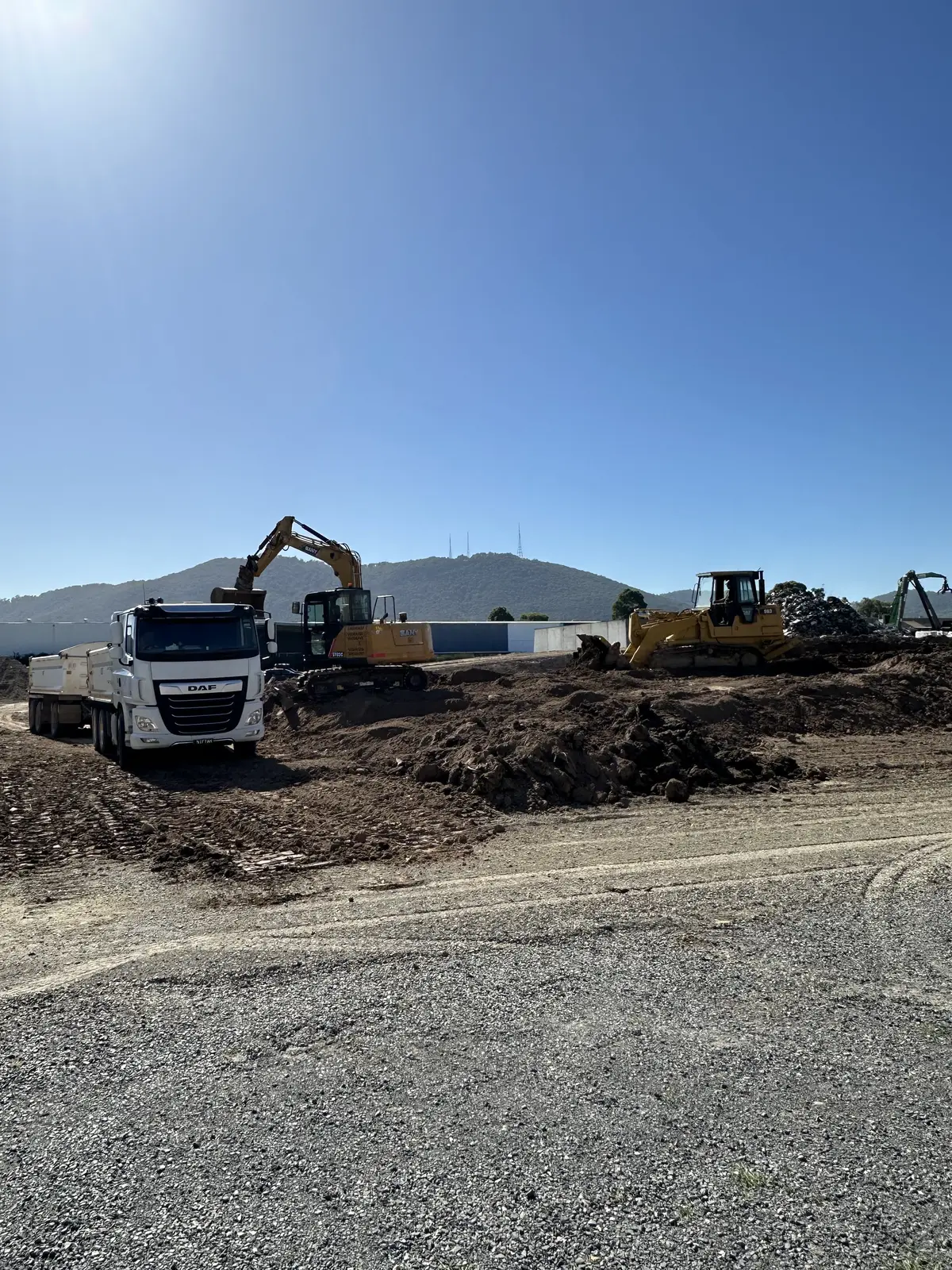
The digging is the short part. Machine time on a straightforward residential driveway is usually a day or two, and a long rural track is a few days more depending on the length, the ground and how much has to be moved. What actually sets the start date is the council permit, ten business days at Yarra Ranges on a clean application and longer if the road is an arterial and the application gets referred on. Get that in early, it is the one part of the job nobody can hurry. Sequencing matters as well. A driveway normally goes in near the end of the outside work, after the site cut, after the retaining and the stormwater, and once the garage or shed slab is in so the finished level is actually known. Put it in earlier and it gets chewed up by everything that follows. Then there is the ground. Right now, coming out of winter into spring, the valley is still holding water, and a base compacted into wet ground does not stay compacted. If the job is not urgent, a fortnight of dry weather makes a better driveway than rushing it in September does.